
Used Lathe Buying Guide: What to Check Before You Pay
If your shop turns shafts, bushings, flanges, or any round parts, a lathe is probably the hardest-working machine you own. And it's also the one where buying used makes the most financial sense — because a lathe is fundamentally a very simple machine.
Cast iron bed, headstock, carriage, tailstock, lead screw. There's not a lot that goes wrong, and a well-made used lathe will outlast its owner.
But "simple" doesn't mean "buy any one." A bad used lathe will cut tapers, chatter, and ruin your tolerance for years. Here's exactly what I check on every used lathe before it ships out of our warehouse.
Why a used lathe is usually the right call
A new engine lathe in the 200-400mm swing class runs $8,000–$25,000. The same machine, 5–15 years old and in good condition, often sells for $2,500–$7,000.
For a small shop doing repair work, agricultural components, or low-volume production, a used lathe isn't a downgrade. It's the same cast iron bed, the same spindle design, at a fraction of the price.
Popular used models — Chinese CA6140 / CA6150, Taiwanese and Japanese engine lathes, and used CNC lathes like the CK6136 / CK6150 series — all have cheap, globally available parts.
First, narrow down what you actually need
Before you watch a single video, decide:
- Swing over bed (160mm? 320mm? 500mm? — this is the biggest part diameter you can turn)
- Distance between centers (750mm? 1000mm? 1500mm? 3000mm?)
- Spindle bore (do you need to pass bar stock through? 52mm? 80mm?)
- Manual engine lathe or CNC lathe?
- Chuck size (8 inch? 10 inch? 12 inch?)
Buying a lathe with 2 meters between centers when your longest part is 300mm is just wasting floor space and money. Buying too small means you can't do half the jobs you wanted.
The 7-point inspection I run on every used lathe
1. The bed and ways
This is the most important thing on the whole machine.
- Run your hand along the V-ways. They should be smooth, with no grooves or scoring.
- Look at the center of the bed — that's where most wear shows up, because that's where the carriage sits 90% of the time.
- If you can see bright, polished "streaks" down the middle of the way, that means the hardened way surface has worn through. A re-grind and scrape is $1,500–$3,000 — walk away unless the price reflects it.
- Check the bed for twist: place a level on the ways both ways.
2. Headstock and spindle
- Turn the spindle by hand (disengage the gearbox). It should spin smoothly with no notchy feel.
- Check end play and radial play at the spindle nose. Anything over 0.01–0.02mm means bearings are tired.
- Listen at every speed range when it's under power. A low growl that gets louder at higher RPM = bad spindle bearings.
- Check the spindle bore for scoring.
- Run through every gear and feed selection. Gears should engage cleanly, no jumping out under load.
3. Carriage, cross slide, and compound
- Move the carriage by hand along the full bed. It should move smoothly, no tight spots.
- Wind the cross slide and compound in and out. Feeling for backlash — a little is normal, but if the handle moves 1/4 turn before the slide moves, the nuts are worn.
- Check the carriage apron: lead screw half-nuts should engage cleanly.
- Test the automatic feed in both directions.
4. Tailstock
- Quill should slide smoothly, no sticking.
- Quill return lever should work.
- Lock the tailstock to the bed and try to wiggle it — it should not move.
- Check the Morse taper in the quill for damage.
5. Chuck and faceplate
- A 3-jaw chuck that's been used hard will no longer grip concentrically.
- Ask if a re-facing is needed — or factor in a new chuck ($150–$400) if the old one is badly worn.
- Check the chuck jaws for chips and wear on the serrations.
6. Threading and lead screw
- Test the thread dial.
- Try cutting a test thread if possible — the pitch should match the dial selection.
- A bent or scored lead screw makes accurate threading almost impossible.
7. Electrical and motors
- Test every speed, every feed direction, coolant pump, and brake.
- Open the electrical box (on video) — look for burnt contactors, melted wire nuts, or a rat's nest of after-market wiring.
- Check the motor nameplate voltage. Most Chinese machines are 380V/50Hz 3-phase — confirm your shop supply matches.
Red flags I'd walk away from
- Bed ways with visible grooves or troughs in the center.
- Spindle you can grab and wiggle up and down.
- Seller refuses to run the machine on camera.
- Machine has been sitting outside in the weather.
- Random "fixes" — a clutch held together with zip ties, a missing guard bolted back on wrong.
- Price 30%+ below the market average for that model and size.
What you can expect to pay (FOB China)
| Type | Common used price |
|---|---|
| Small bench lathe (≤300mm swing) | $800 – $2,500 |
| Engine lathe CA6140 / C6240 (400×1000) | $2,500 – $5,000 |
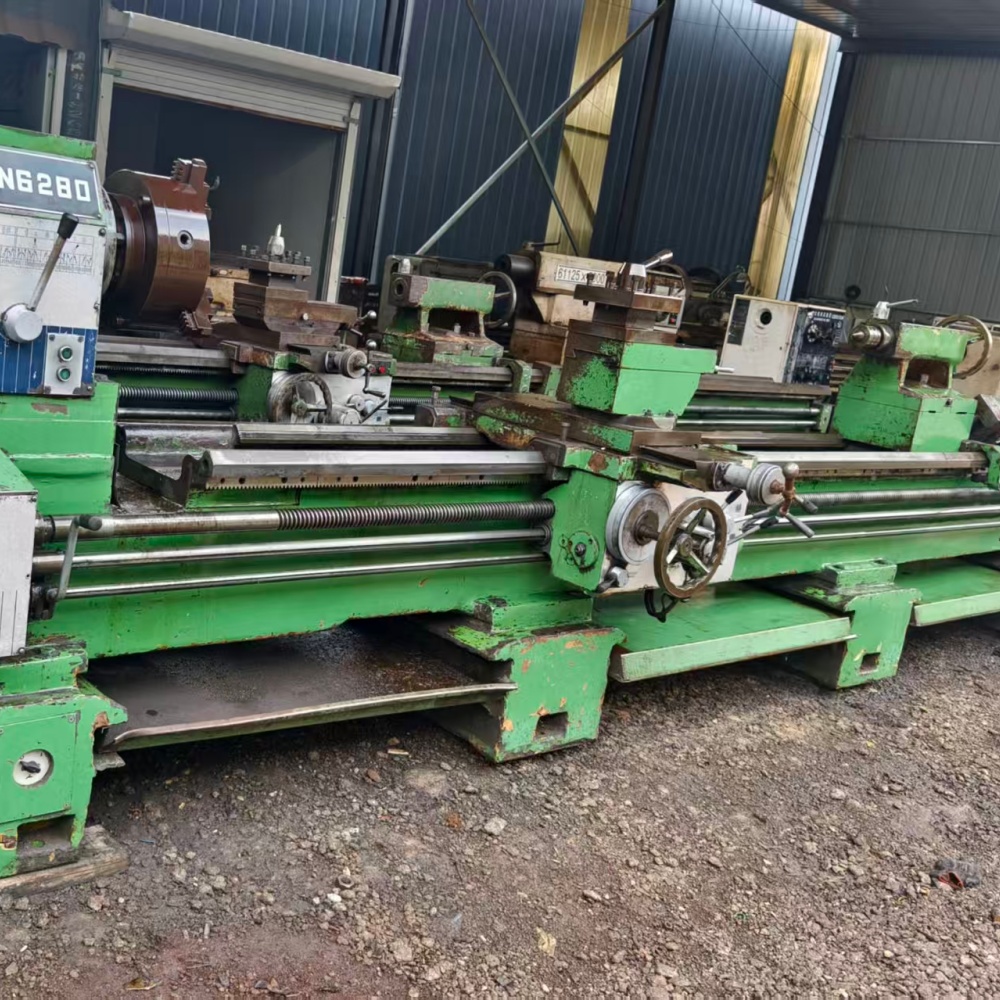
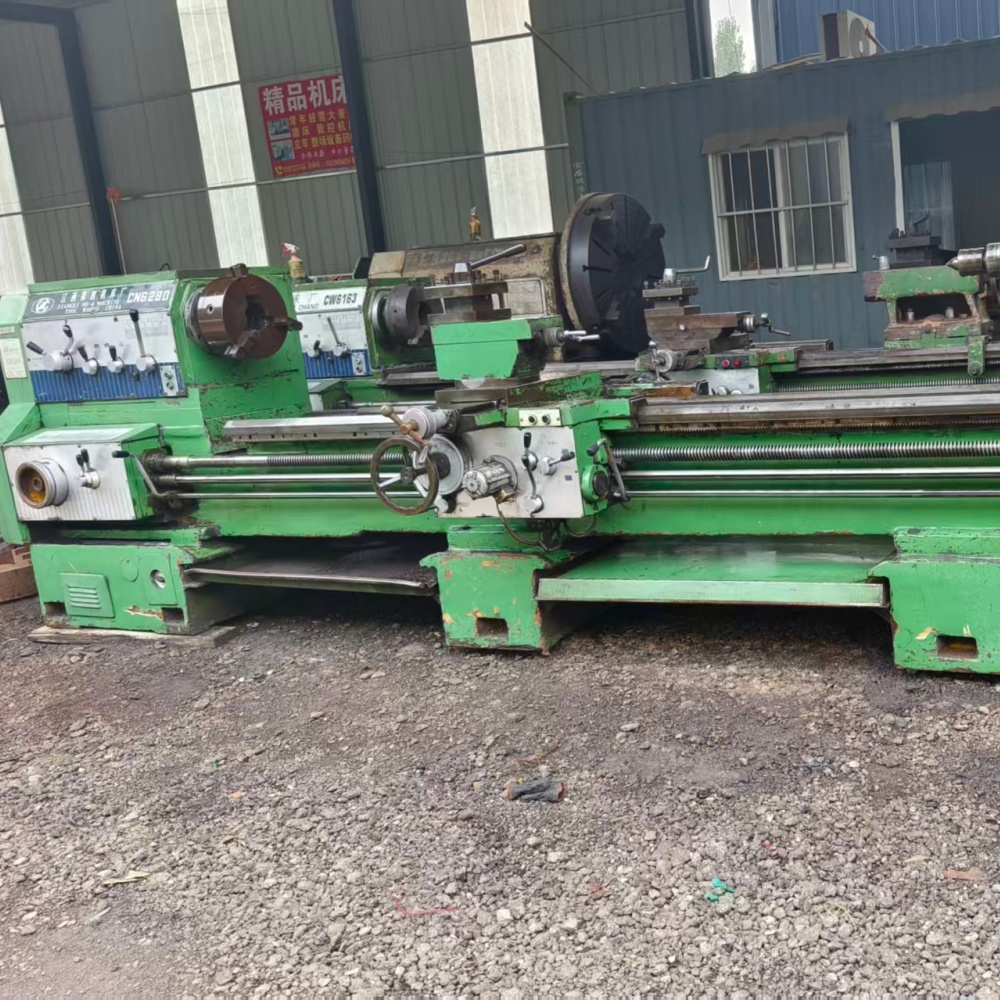
| Heavy lathe CW6163 / CW6180 | $6,000 – $12,000 |
| Used CNC lathe CK6136 / CK6140 | $5,000 – $10,000 |
| Used CNC turning center (with live tooling) | $12,000 – $25,000 |
Popular models worth looking for
- CA6140 / CA6150 — the classic Chinese workhorse. Parts are everywhere, simple to fix.
- CK6136 / CK6150 — used CNC flat-bed lathes, usually with GSK or Fanuc controls.
- Taiwanese/Japanese engine lathes (Takisawa, Kitamura, Enshu-style) — higher precision, usually higher price.
- Russian and European lathes — heavy duty, but parts can be a headache.
Final thought
A lathe is the one machine where "good used" beats "cheap new" almost every time. The cast iron needs 20+ years to settle in, and a properly inspected used machine will hold tolerance better than a brand-new import that was dropped off a truck.
The whole game is the inspection. Get a video of the spindle running, a close-up of the ways, and a test cut. If the supplier won't show you those three things, move on.
Looking for a used lathe? We stock engine lathes and CNC lathes in our China warehouse — inspected, run-tested, and video-verified before shipment. Contact us with your required swing, length, and budget, and we'll send you real options with honest photos and a straight FOB quote.